Mantis
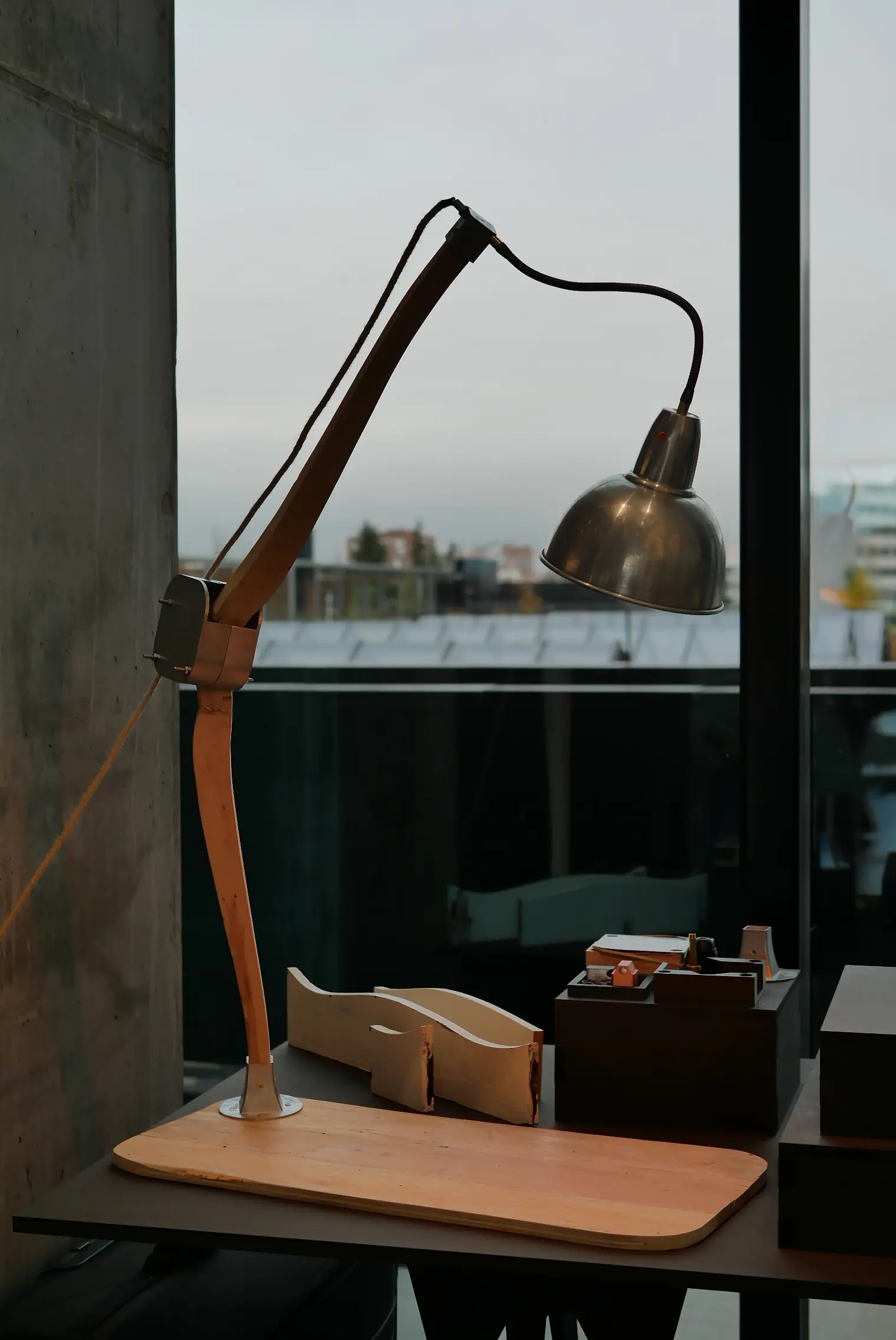
A side table in need of repair, reborn as a standing lamp.
- Brief
- take a found object, transform it into a new product
- Source
- a wooden side table, in need of repair
- Made with
- salvaged timber · custom 3D-printed joints · 3D-printed base · sourced shade, fitting and wiring
- IE University, School of Architecture and Design - final exhibition (2026)
- Meyrit Biennale, Madrid (2026)
Mantis is my most recent product project, from Fabrication Technologies - a studio built around circularity and open-making, and a direct confrontation with the take-make-dispose habit of how most things are produced. The brief was the kind I like most: take a found, discarded object and bring it back as something new. Rather than start from a clean sheet, I started from a problem - a wooden side table that no longer worked, its joints failing and a leg loose. The question was not what to design, but what this particular object could become.
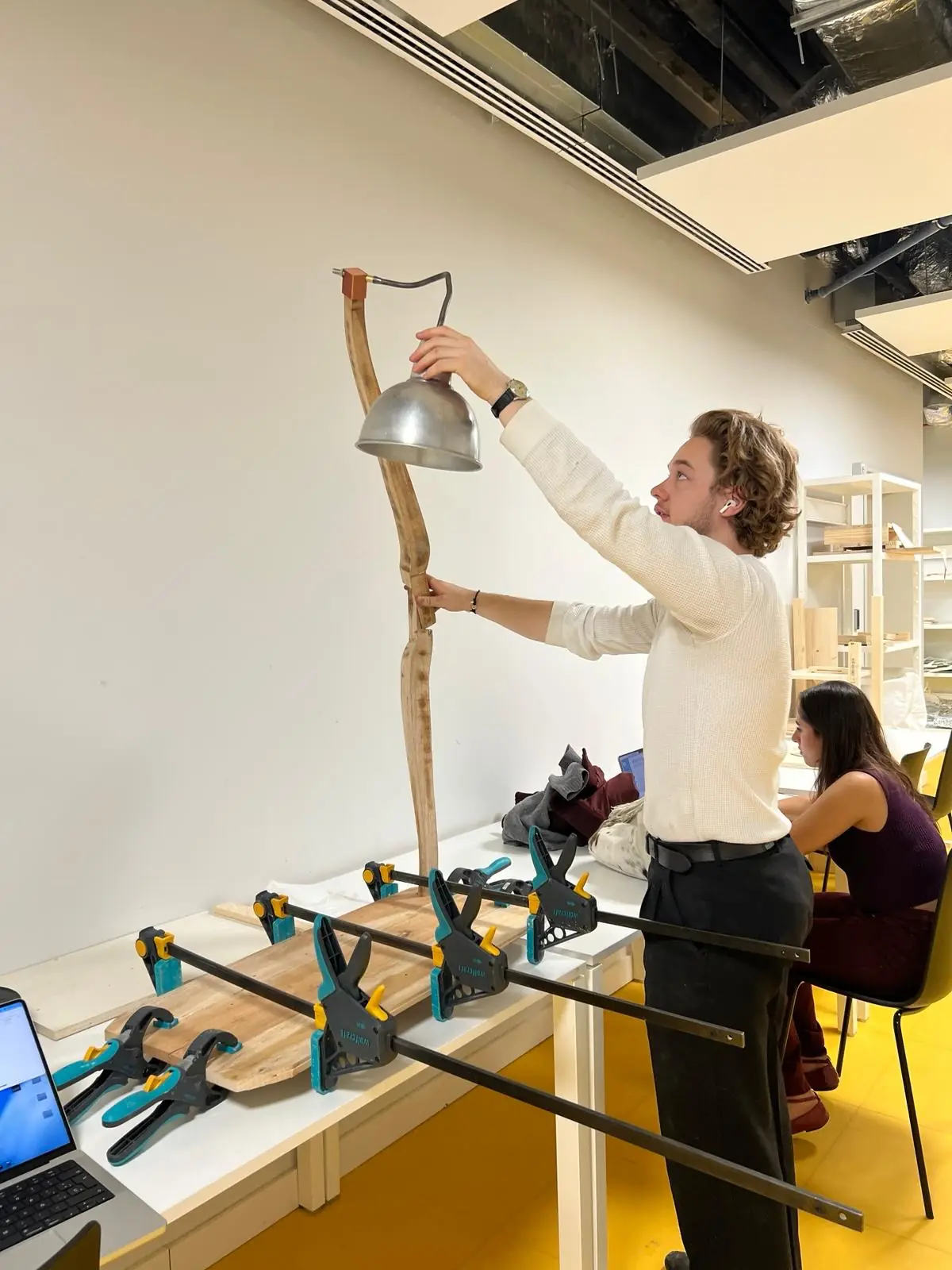
A side table is horizontal, low and passive - something you put things on. A standing lamp is vertical, tall and active - something that changes a room. Mantis is the move between the two: the same salvaged timber, reconfigured into an object with a completely different posture and purpose. Nothing was bought in to replace what already worked. The design is in the reassembly, not the replacement - and the angular, poised stance the timber ends up in is where the name comes from.
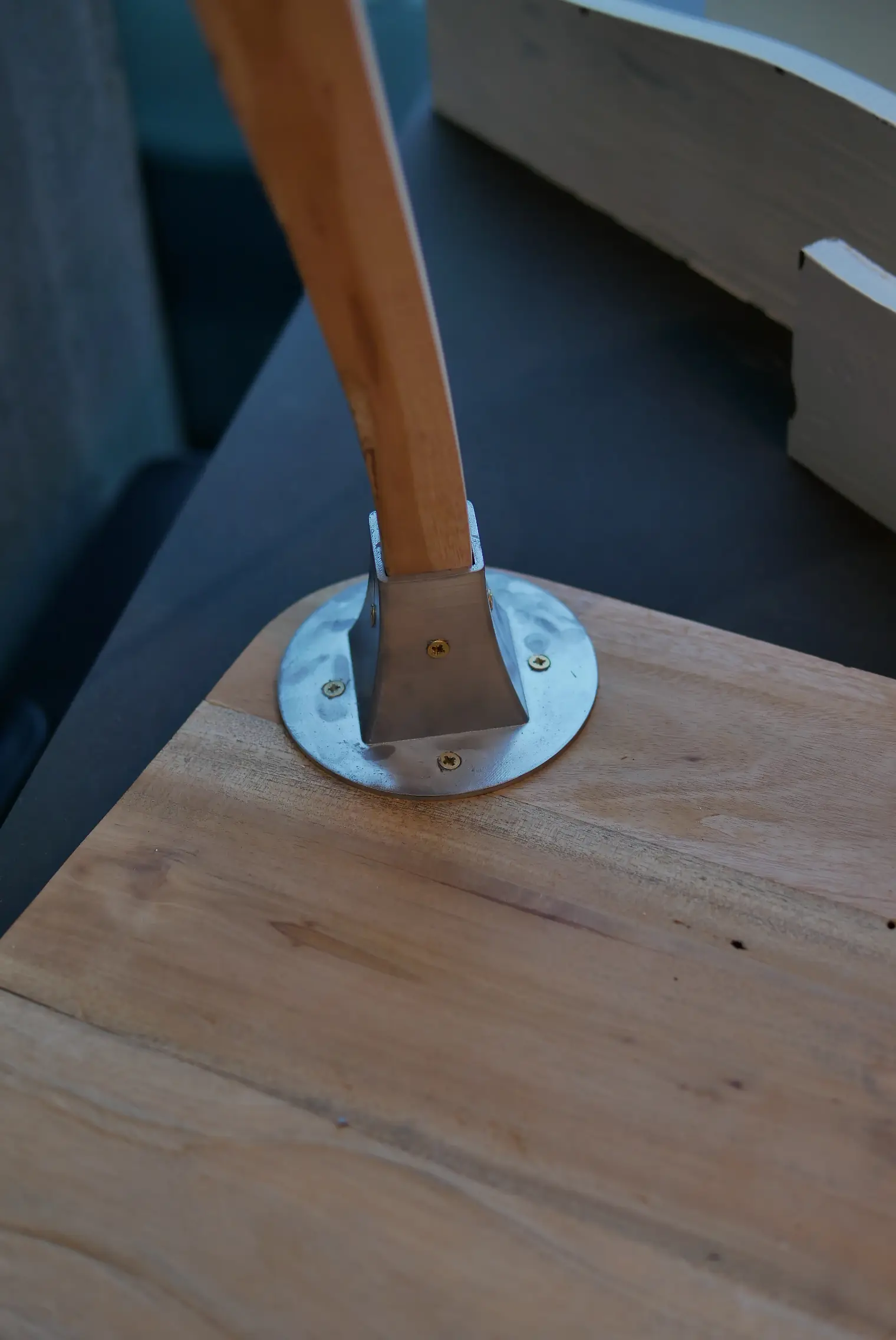
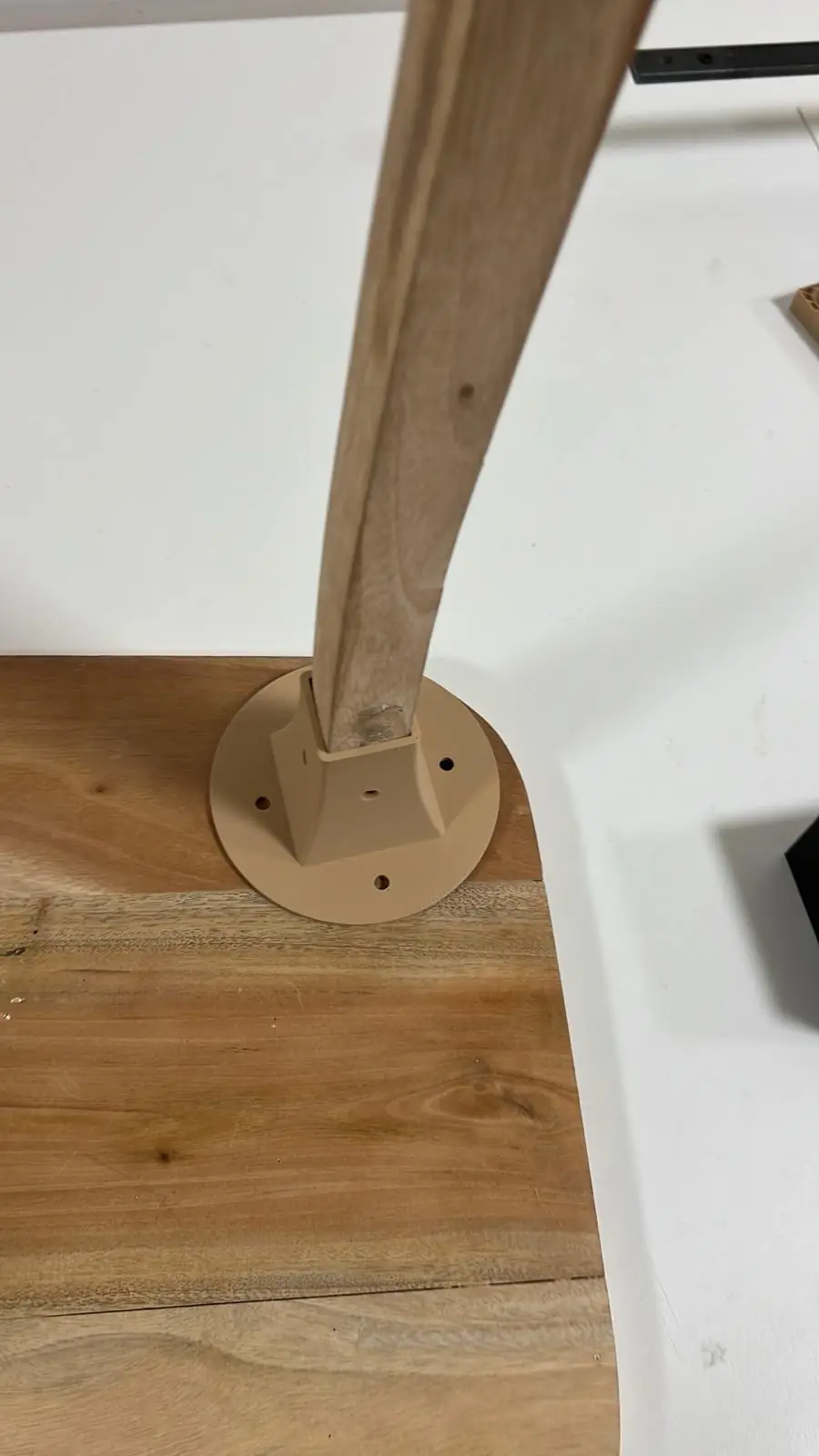
The salvaged timber could not be rejoined at the angles the new form needed using the joinery it came with, so the real design problem became the connectors. I designed a set of custom 3D-printed joints, iterated through several printed versions, engineered to grip the timber and hold it at the new angles - and it is those joints that give the lamp its articulated, mantis-like stance. This is the heart of the project: not the timber and not the shade, but the small printed parts that let a failing table stand up as something else.
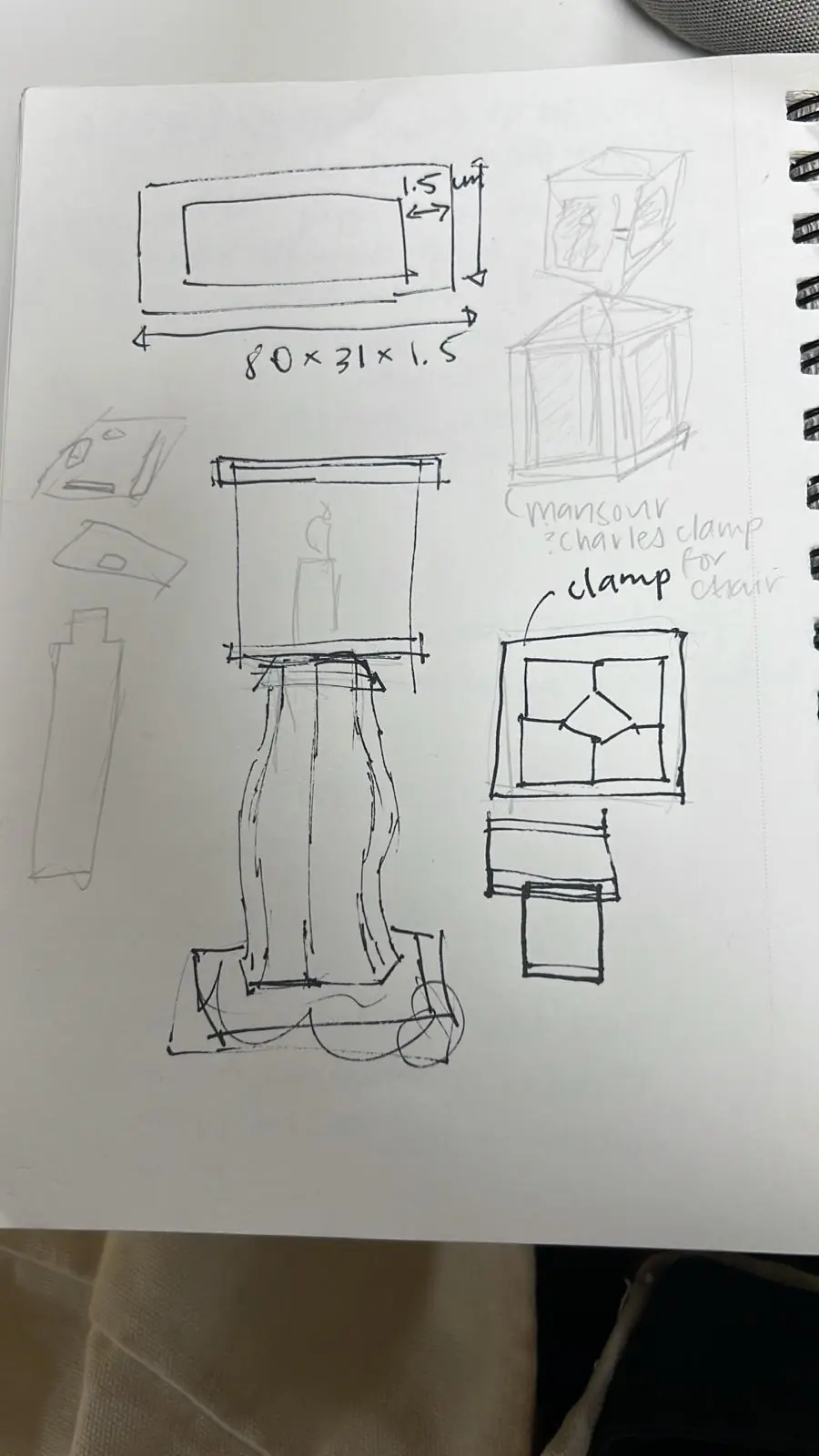
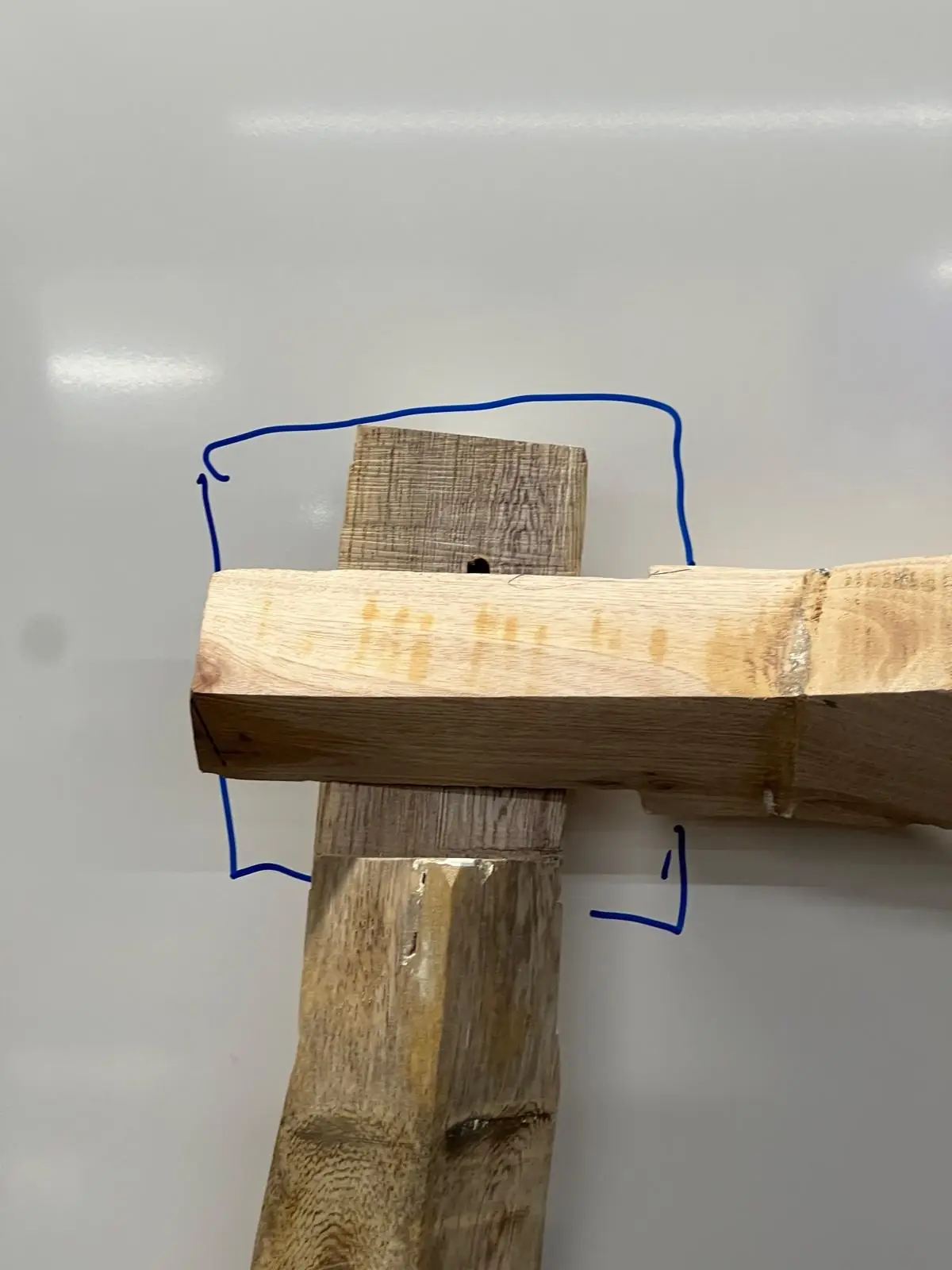
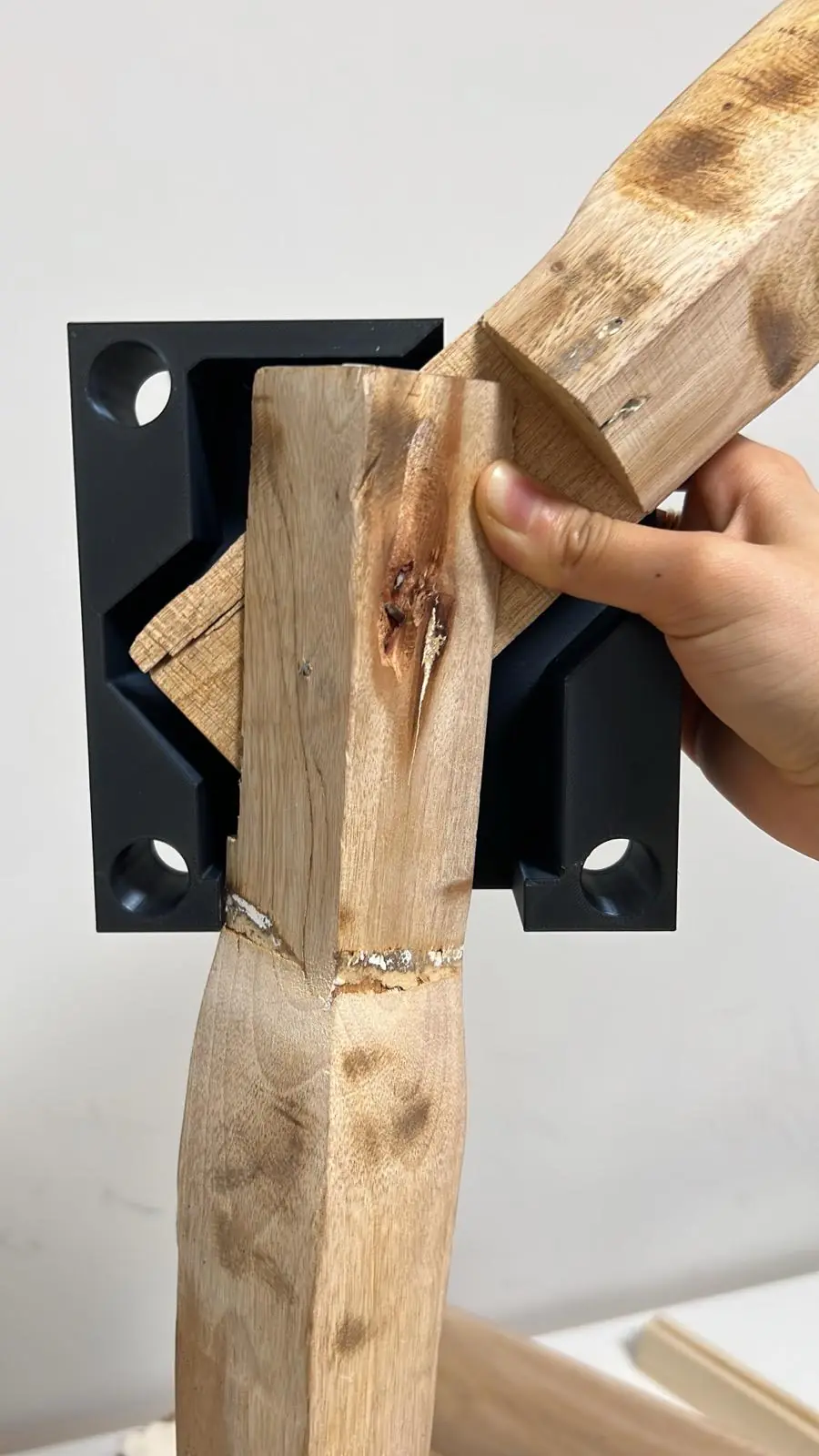
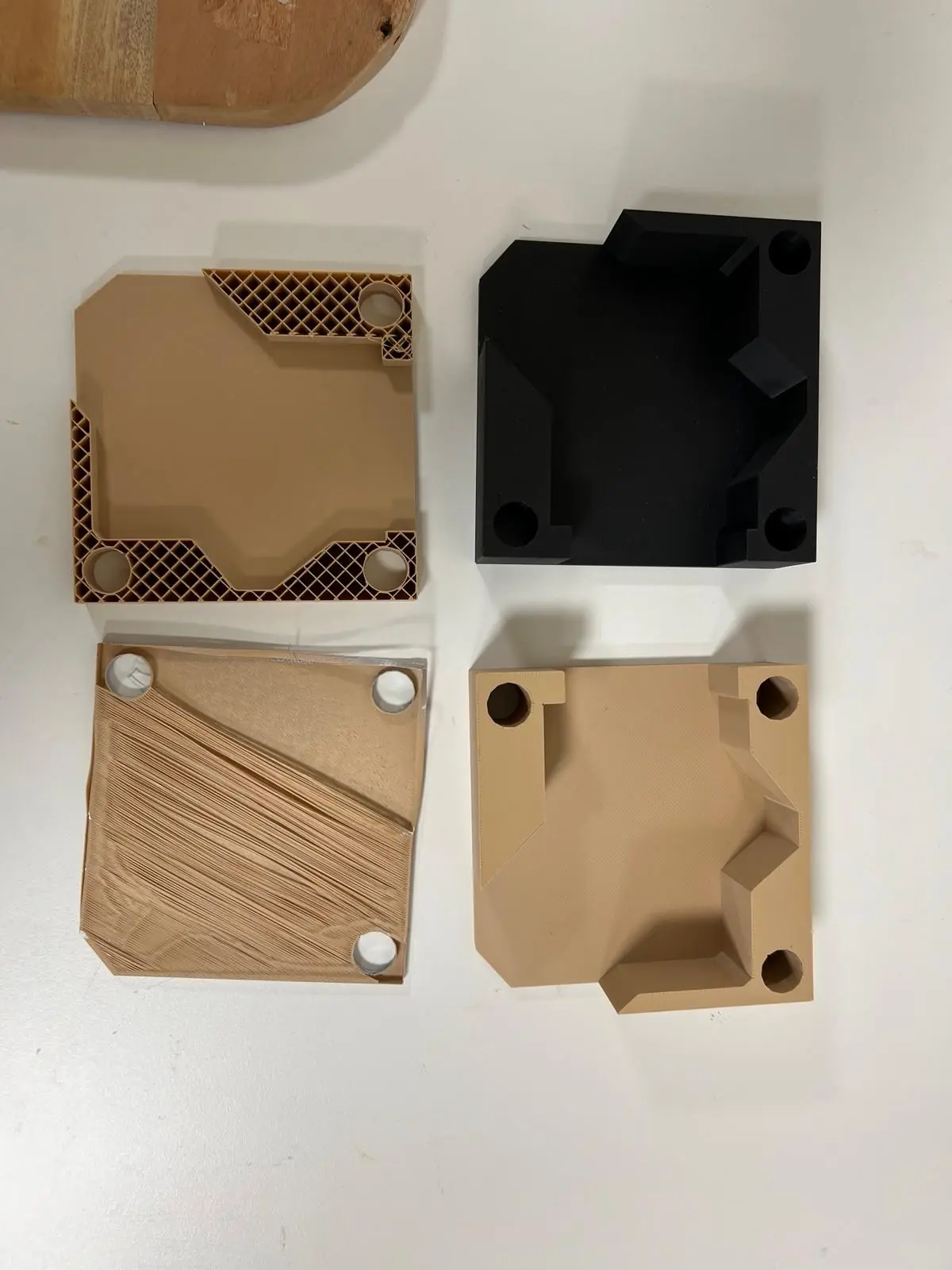
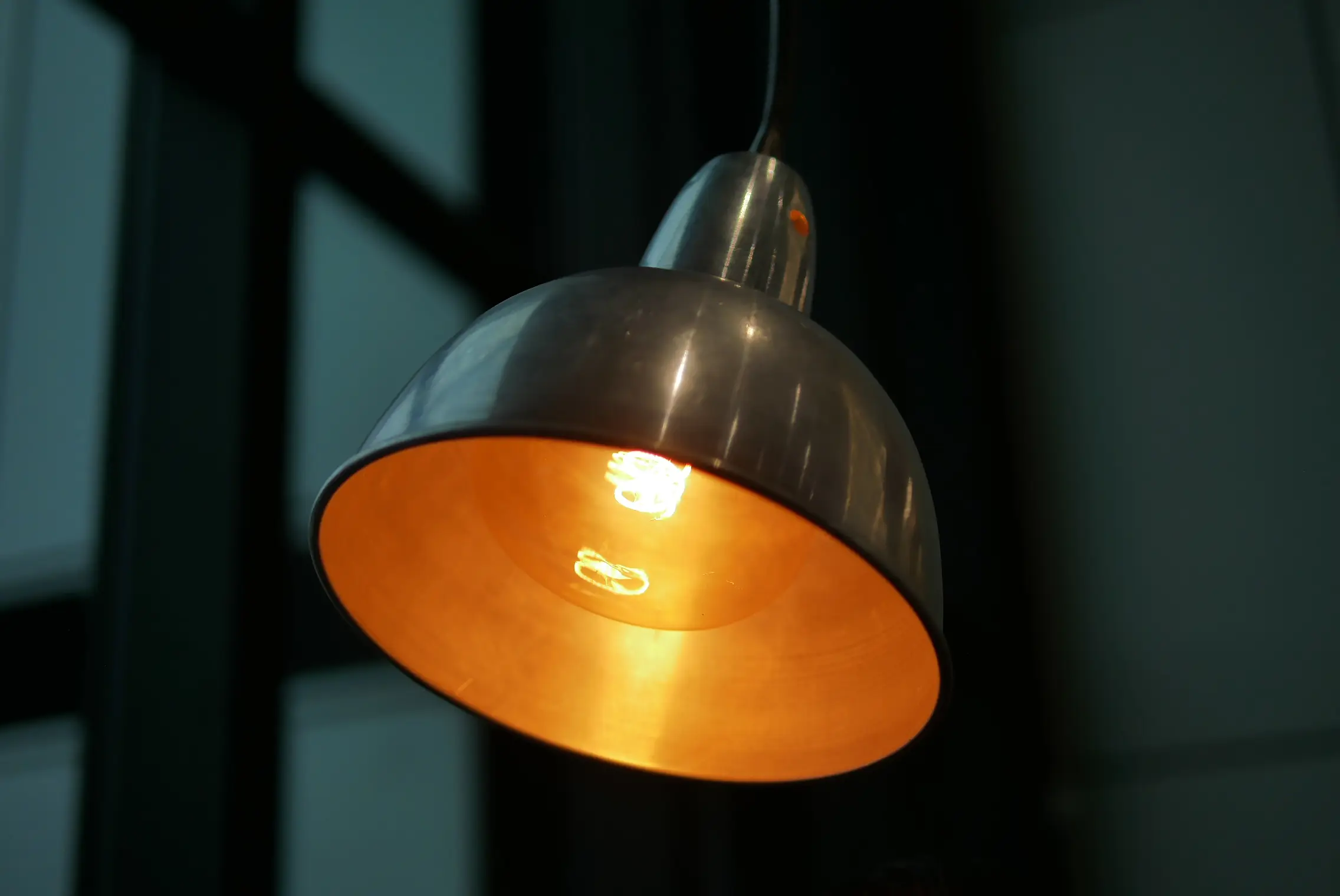
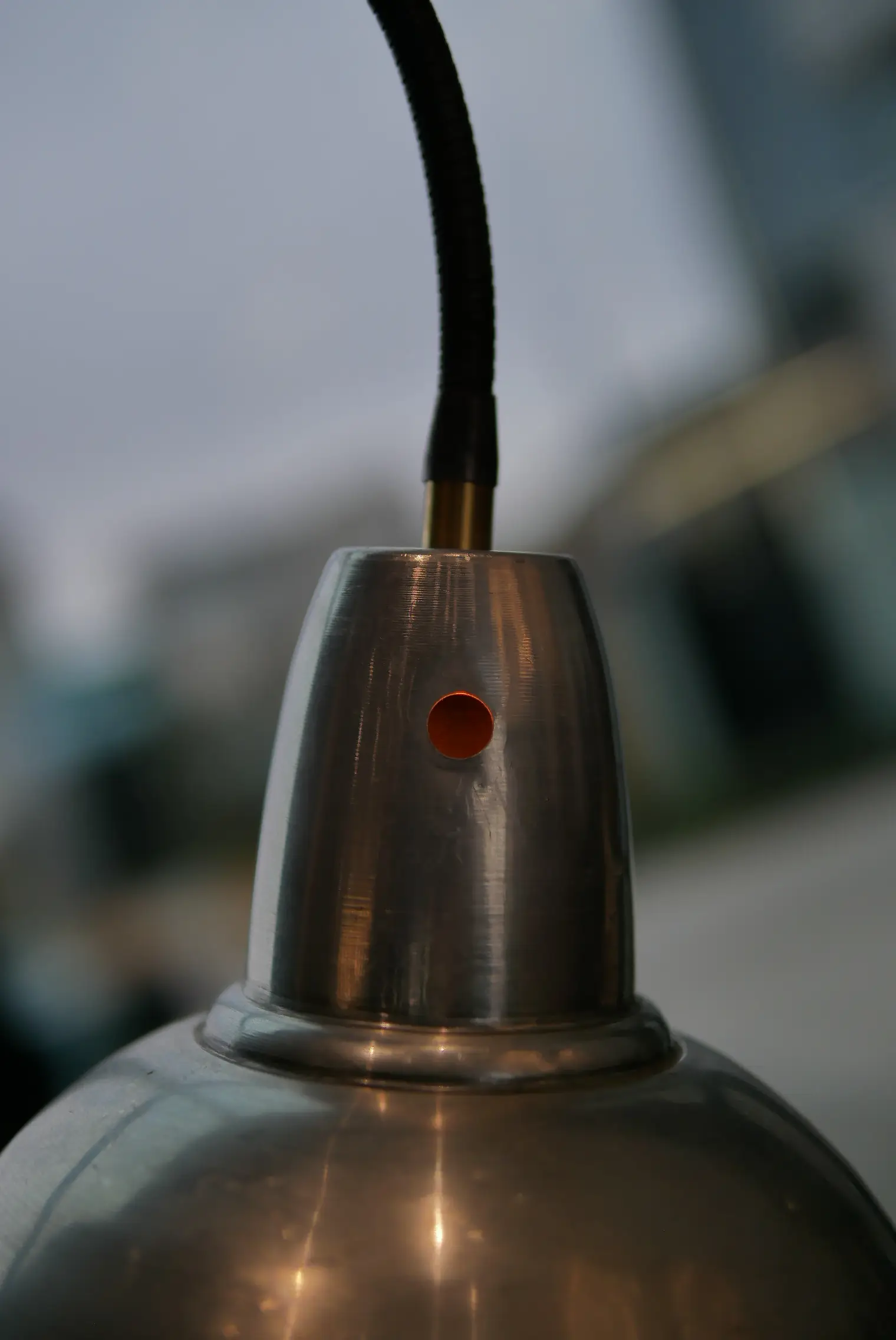
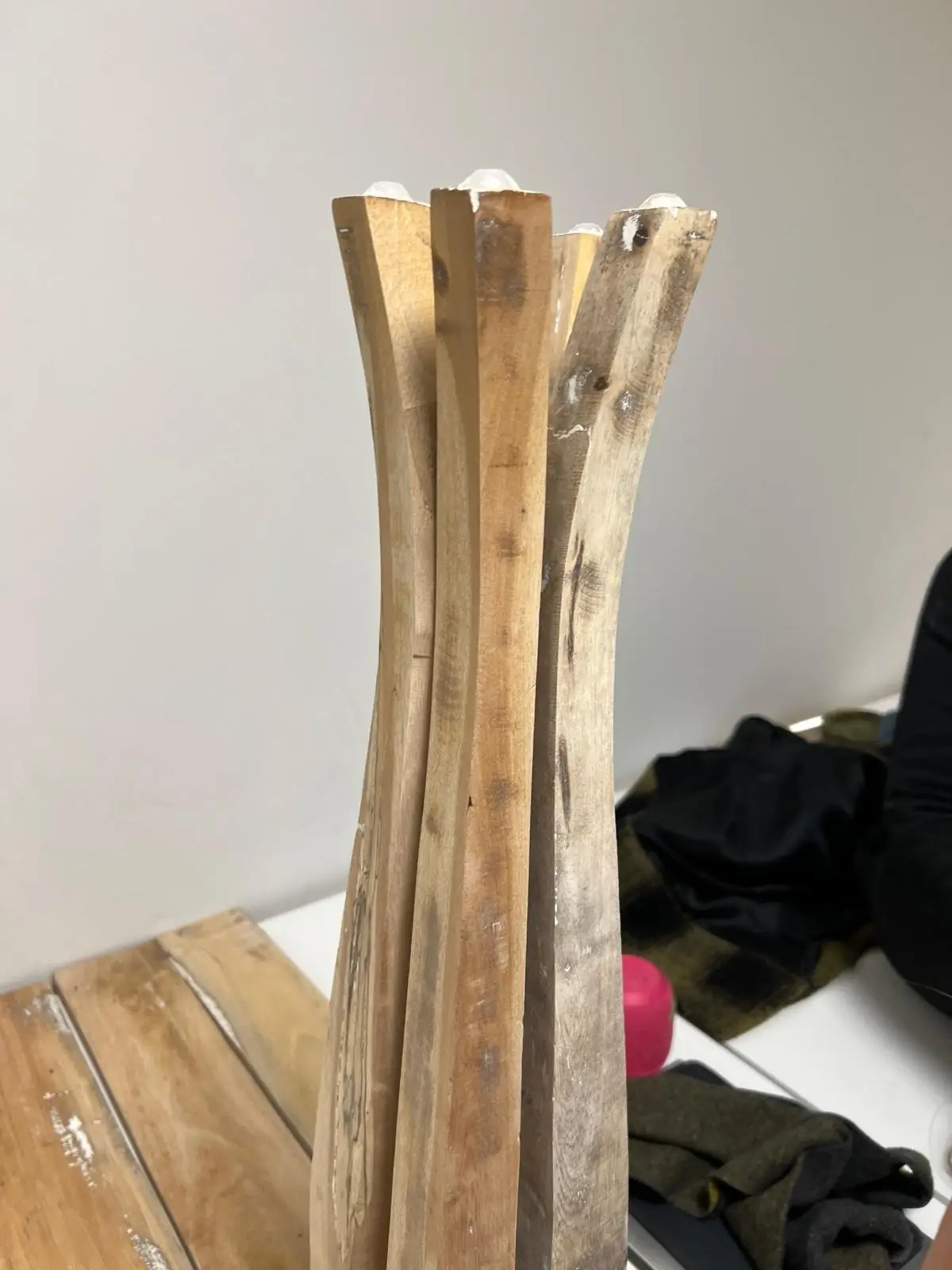
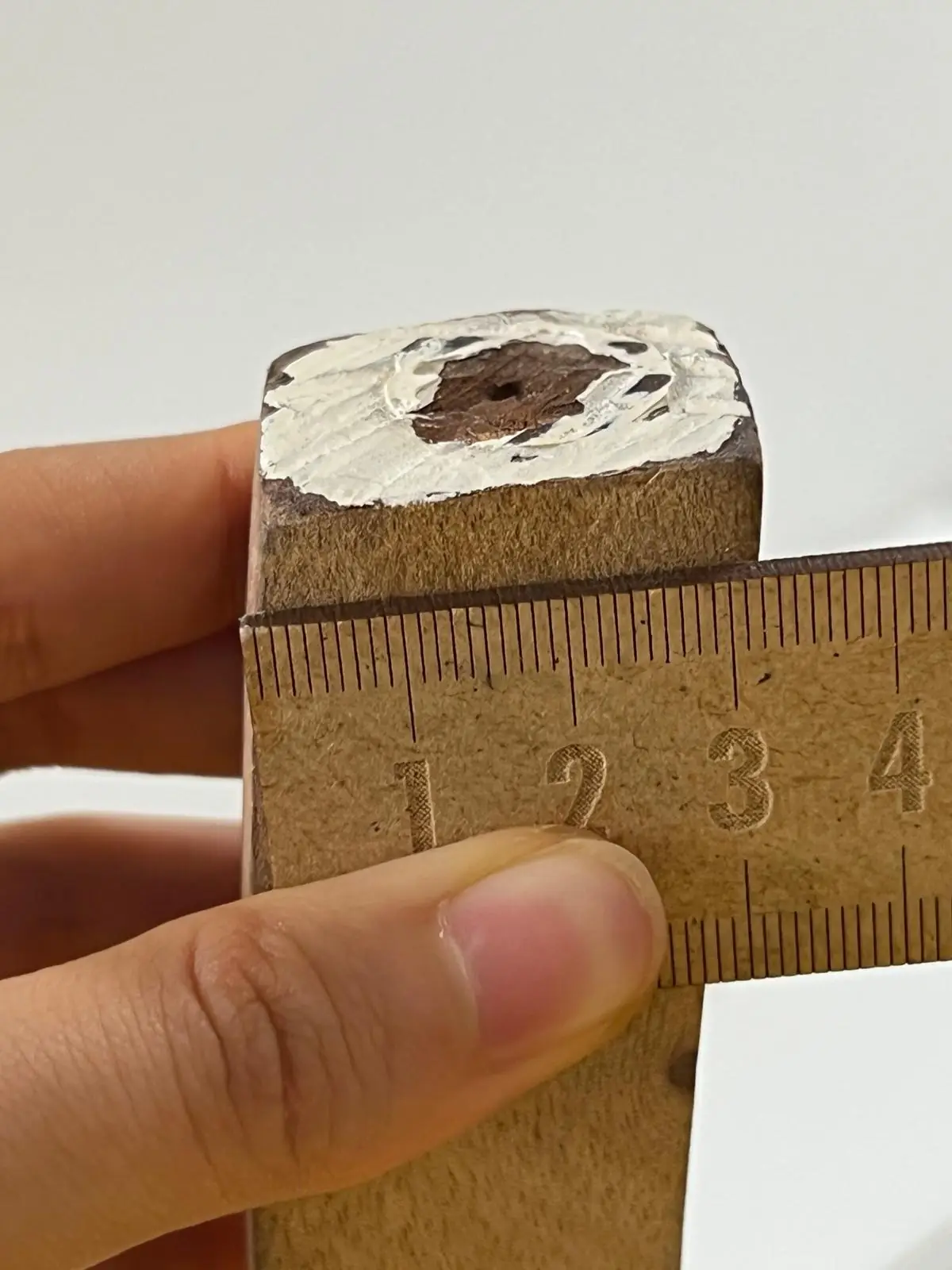
I worked from the salvaged timber - curved lengths in roughly four-centimetre sections - boring and filling the ends to take the wiring and the fixings. The 3D-printed connectors hold the structure at its angles, and a 3D-printed base anchors the stem and gives the lamp its footing. The shade, the fitting and the wiring were sourced and assembled into the body, until a piece of broken furniture stood up as a working lamp.
Mantis was selected for IE University's exhibition of the School of Architecture and Design's best projects, and shown externally at the Meyrit Biennale in Madrid. It is the clearest statement of an idea that runs through much of my product work: the most interesting brief is usually a constraint, the most sustainable material is the one that already exists, and the design often lives in the joint.