Wave
A salvaged pair of speakers, rebuilt into a custom desktop enclosure.
- Brief
- ten deliverables a week, for ten weeks (group)
- Disciplines
- electronics · woodworking · audio · product design
- Source
- a broken pair of Edifier desktop speakers
- Made with
- CNC'd solid wood, hand-finished · 3D-printed and machined internals
Wave came out of a brief called Process Porn, from a Processes and Design Theory studio. Its whole object was to develop a methodology of your own by celebrating the process of making over any finished product - design as play, graded seventy percent on process and thirty on result. The instruction, almost literally, was to forget the outcome and document the journey: ten deliverables a week, for ten weeks.
So we did not set out to design a speaker. Over the term the team - Mansour, Anya and I - worked through a sequence of experiments: deconstructing and reconstructing found furniture into chairs, testing wood stains and finishes, repurposing offcuts. The brief rewarded the exploration itself, so the work was a string of outcomes rather than a march toward one. The speaker was where it finally settled - the most resolved thing the process produced.
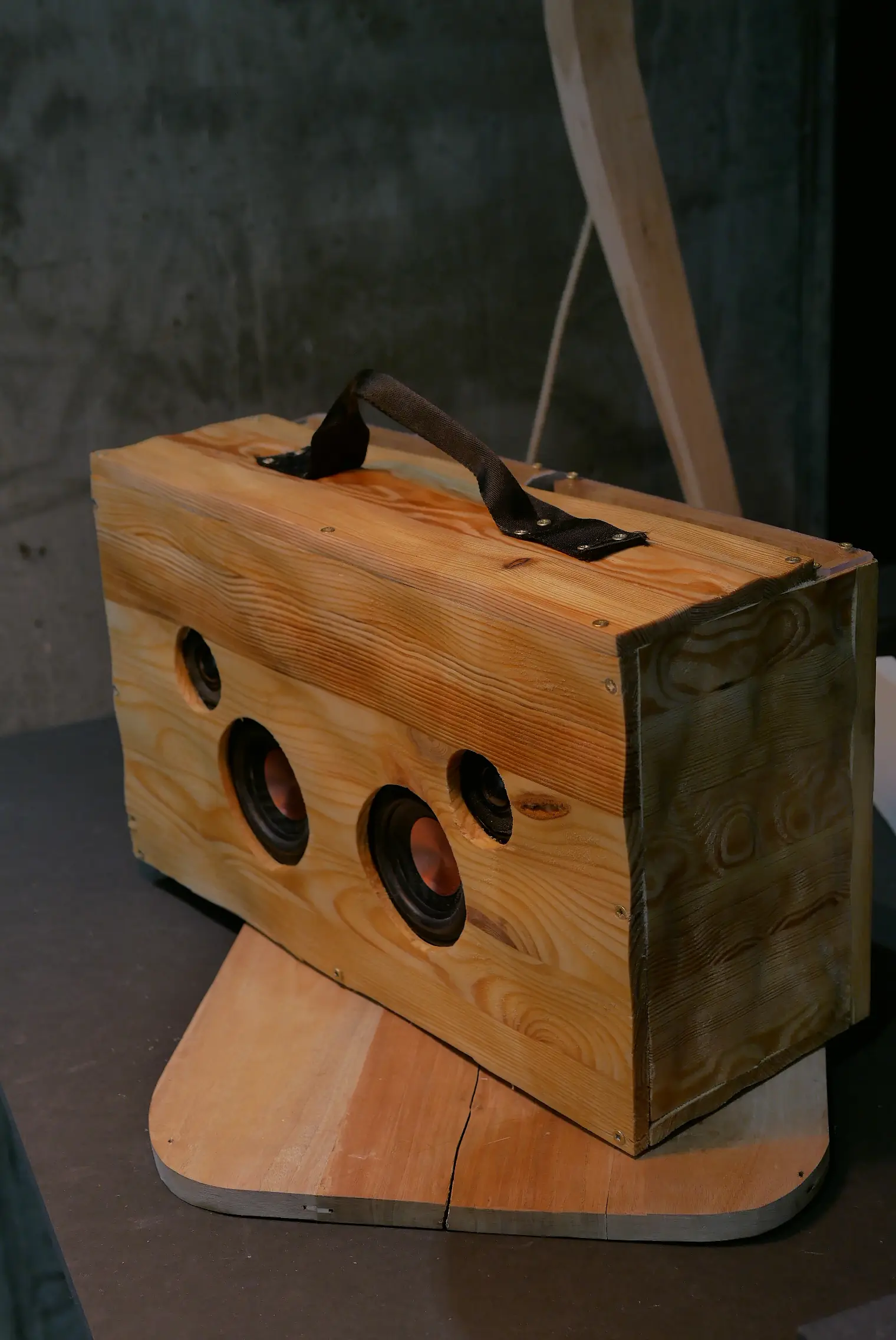
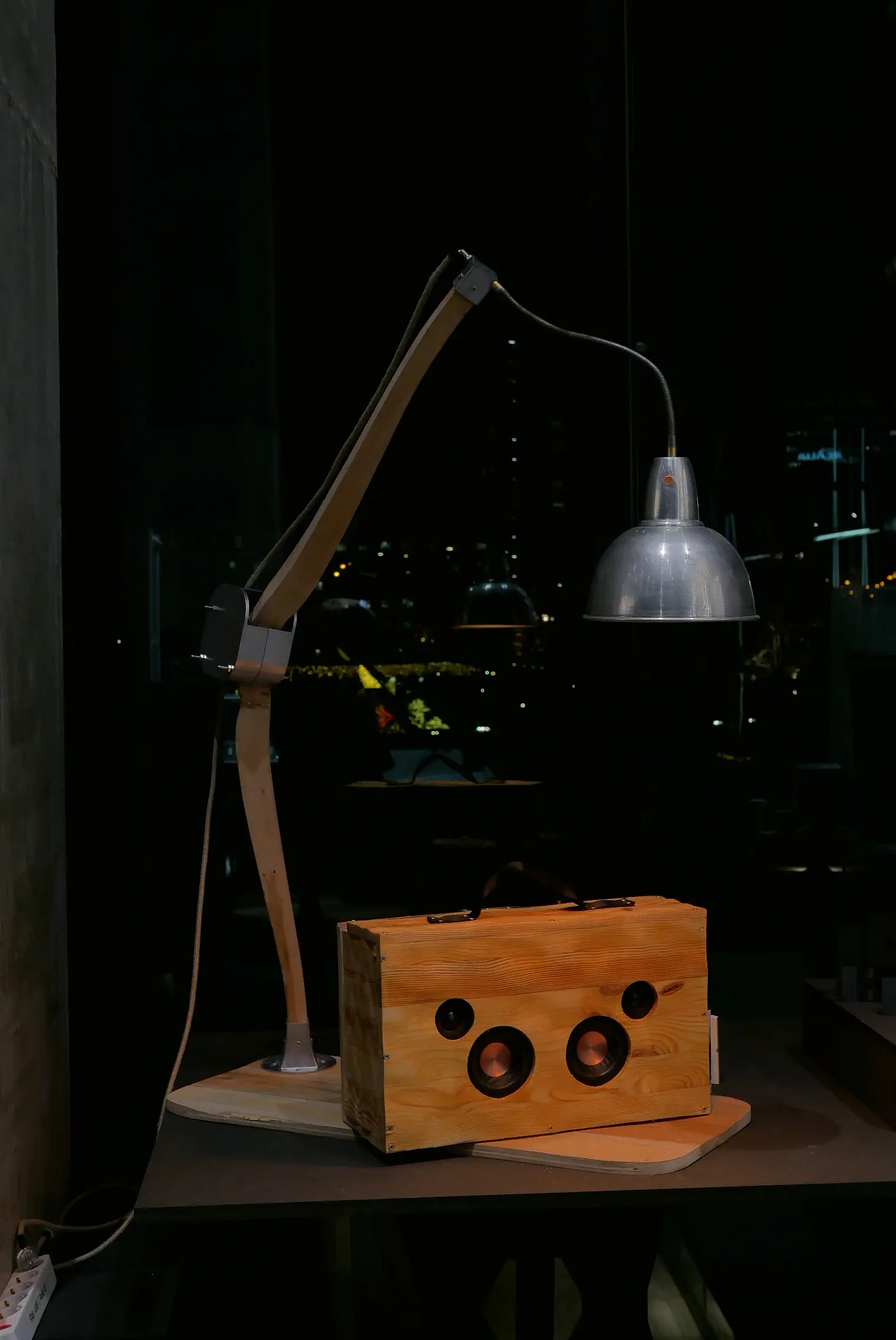
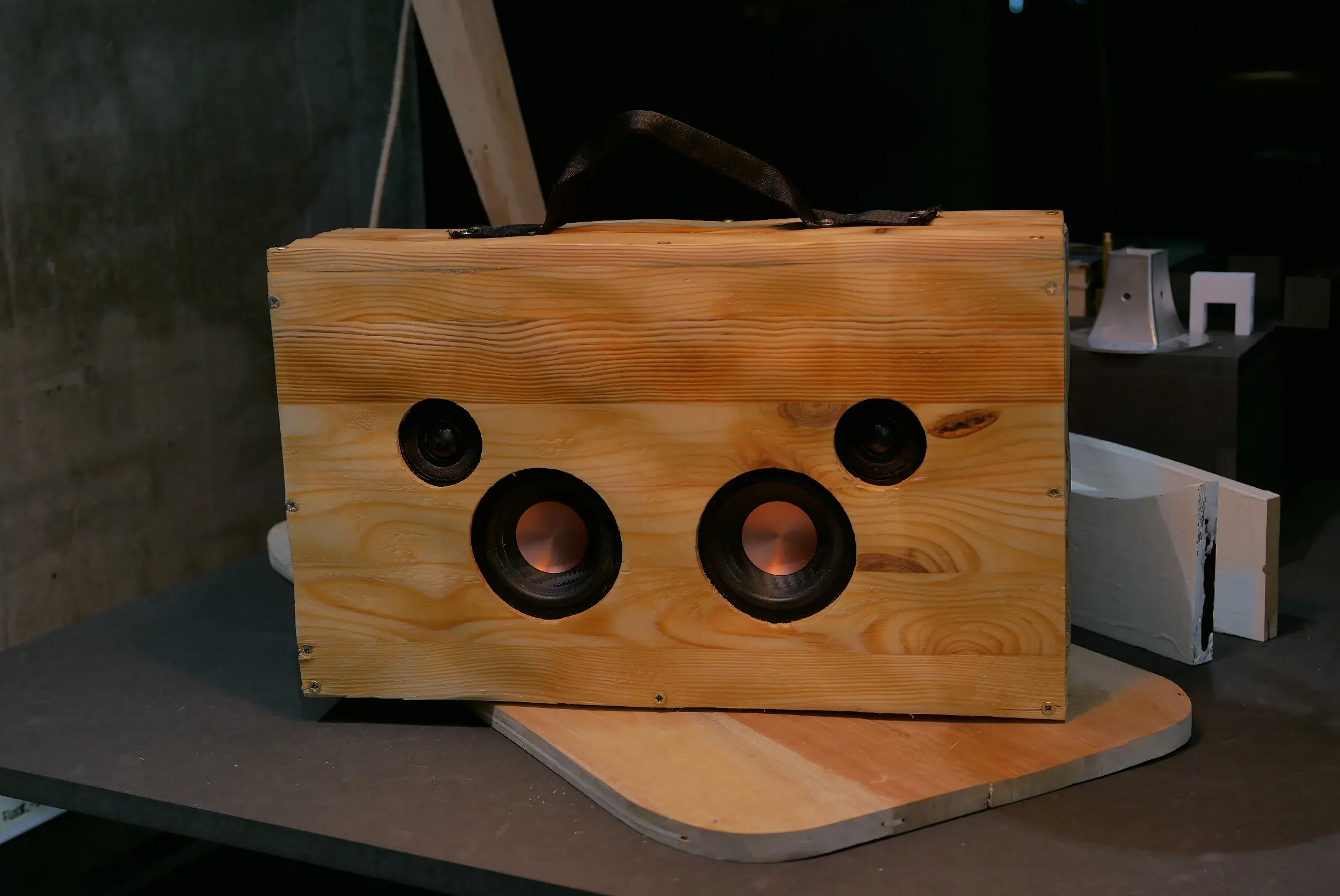
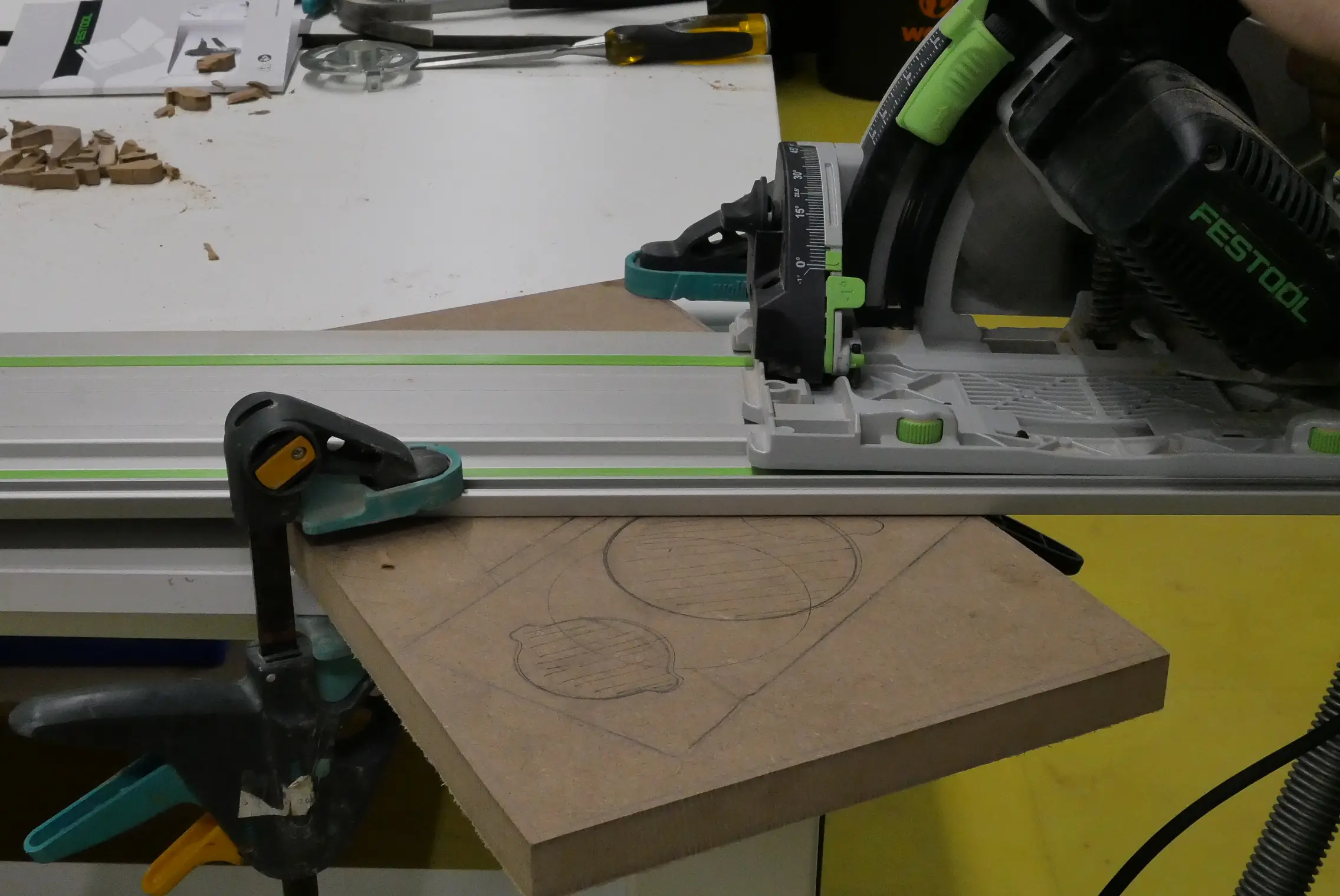
When the process found its object, it found a constraint to work against. We started from a broken pair of Edifier desktop speakers - the drivers were salvageable, the housings were not - so the speaker became a job of repair and rehousing rather than building from nothing. We rebuilt the salvaged drivers into a custom enclosure, CNC'd from solid wood and finished by hand, with the crossover, amplifier, port and wiring mounted inside and Bluetooth and a twelve-volt supply driving it. Wood was a functional choice as much as an aesthetic one: a rigid, solid cabinet limits the unwanted resonance a flimsy housing introduces, so it suits the driver as well as the eye.
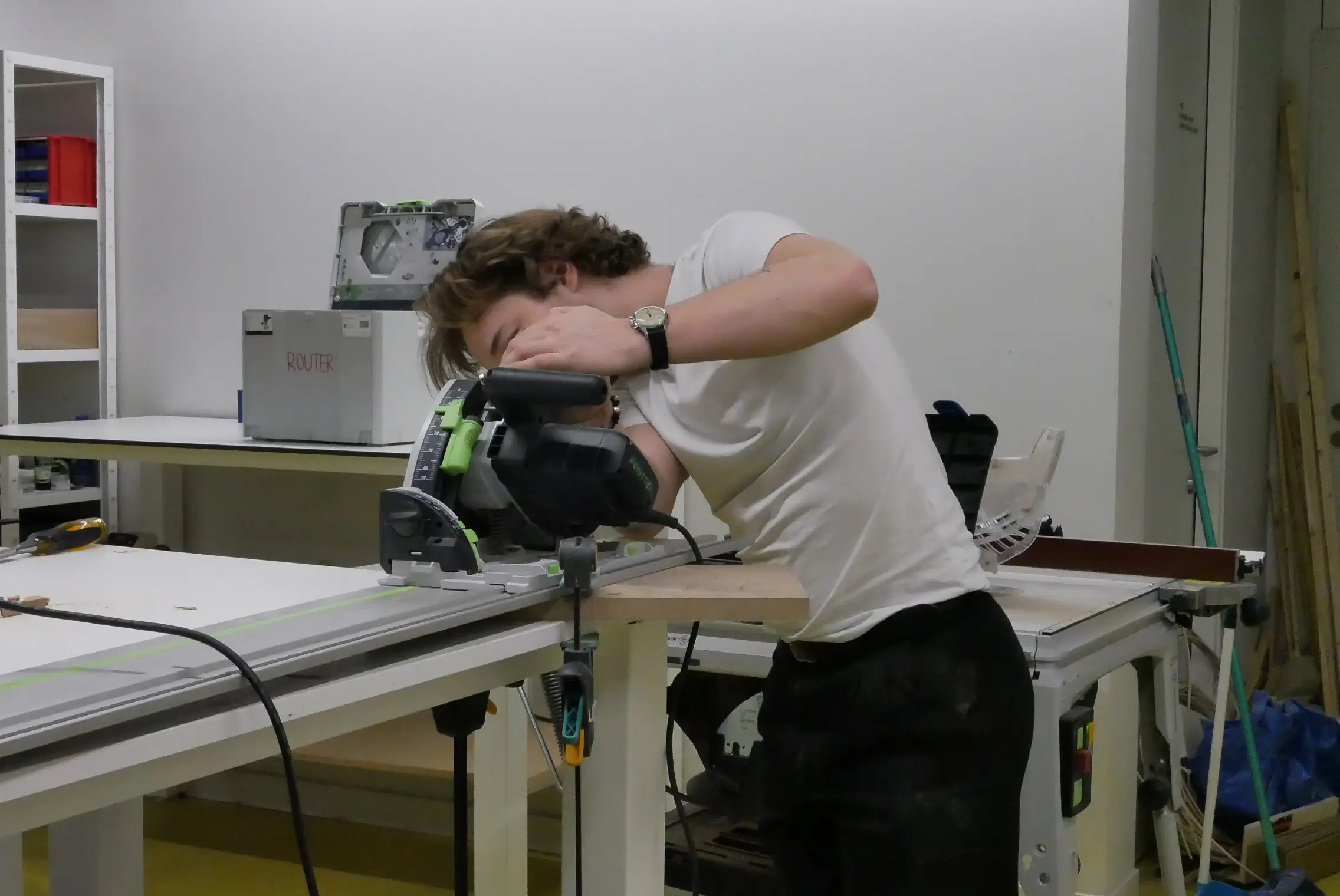
The most unusual deliverable was a thing in its own right: a full, illustrated build manual - "Build a Speaker" - documenting the entire assembly step by step, from gluing and clamping the cabinet, through populating and soldering the crossover and mounting the electronics, to first power-up, testing and troubleshooting. Writing it turned a one-off object into something repeatable and shareable, which is the truest expression of what the course was about: the method is the work, made open enough for someone else to follow.
The result is a working Bluetooth desktop speaker - salvaged drivers in a hand-finished wooden body - and a manual that lets someone rebuild it. But the real deliverable was the methodology the brief was after, and it is one that recurs across my product work: let the making lead, document everything, keep what works, and rebuild the rest.